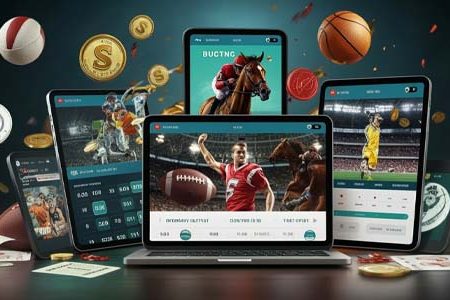






Wagering scenarios are a place where FOMO is common, especially when streaming and apps can be compared instantaneously across states. Tension is created, and poor decisions follow from feeling like something is being missed. Anyone looking for the best Florida sportsbook and then seeing another state’s options is familiar with this feeling.
Wagering FOMO is apparent in every travel context, and understanding this psychology, in conjunction with self-regulating systems and other practical systems that prevent emotions from guiding your wagers, is how you will remain in control. We have set the bar: understanding the triggers, the psychology, and having practical systems in place that will prevent emotions from guiding your wagers.
This will include:
- The origins of wager-related FOMO
- Digital systems fostering urgency
- Key behavior and decision-making patterns
- Common issues and practical solutions
- Structure and tools that deter the impulse to place bets
- Analysis of the future and behavior patterns
- Routines to stop unplanned bets
- Frequently asked questions
We can shorten this to just the essentials if you want.
Fundamentals
FOMO—fear of missing out—when it comes to gambling, has some psychological and technological roots. Back in the day, gambling was done in physical sportsbooks, over the phone, or through a local bookie. These wagering methods had access limitations by default. There were limited hours of operation, busy lines, and slow updates on the odds. As such, people didn’t engage in the same level of FOMO. Back then, gambling was more of a leisurely pursuit, and when participants were busy, there was an awareness that no one was making money during that time.
With the expansion of technology to mobile apps, we entered an era of 24/7 access to odds. Constant social feeds highlight “big wins” and show active promotional giveaways. These technological developments allow for real-time bet tracking and profit claims. The result is predictably more urgency, more impulsivity, and more FOMO. The gambling pursuit is no longer leisurely, and it is possible to lose money during any of the busy hours.
The idea is quite simple. FOMO is the uneasiness that comes from the belief that others are receiving rewards that you are not. In terms of gambling, it manifests itself through three main avenues.
- Opportunity-Based FOMO. The fear that a particular wager or promotional offer is about to be taken off the table.
- Social Comparison FOMO. The belief that others are winning, and if they are, you should be winning as well.
- Outcome FOMO. Even in the absence of possible outcomes, the loss is apparent. You visualize the wager you did not place being the winning wager.
Contemporary gambling applications are able to facilitate and support all of these avenues. Odds change in real time. You receive alerts due to the offer being boosted or refreshed during specials. Winning reels are shown while the losing reels are hidden. Transport geography increases the FOMO pressure as people move from different states. The gambling pressure FOMO is evident from the activity in Florida.
In-Depth Breakdown
Core Principles Driving Betting FOMO
The very concept of FOMO revolves around scarcity. Once a betting application begins displaying a limited timeframe clock, offers, and fluctuating betting lines, a user begins forming perceptions of scarcity, despite the potential changes being minimal. Another factor to consider is immediacy. Current user interfaces demand immediate interaction as a result of the betting application’s employment of immediacy and alert notifications. Decisions to gamble can be made almost instantly as a result of “in-play betting.” Coupled with partial reinforcement of a scenario where the user wins an impulsive bet, this results in a self-reinforcing cycle as a result of an impulsive betting scenario.
The next significant social factor is social proof. Winning parlay betting slips and associated payouts are advertised and posted on social media by the dozens every single day. The social media phenomenon is exacerbated by the fact that users rarely post losing bets. This makes winning bets appear far more frequent than they actually are. This perceived widespread success is a social psychological trend and an extreme example of FOMO obtained by the combination of scarcity, immediacy, and social proof.
Mechanics Behind FOMO Loops
FOMO can stem from many different cues, such as notifications, promotions, a friend winning, or when odds change. A thought reflexively follows: “If I don’t go in, I’ll miss the best opportunity.” Then, the emotional aspect comes into play. This creates a sense of urgency that results in unplanned action.
Loop Example:
- Cue: “Boost expires in 10 minutes.”
- Thought: “I’ll miss the edge.”
- Behavior: Placing a bet in an unmeasured way.
- Outcome: Win or loss, but circuited behavior becomes likely for the future.
At this stage, Florida sports betting behavior becomes difficult because attention narrows and the rational evaluation window shrinks. The interface design, notifications, and app structure reward rapid engagement, which makes it easy to confuse activity with advantage.
Recognizing and Interrupting FOMO Patterns
Seasoned gamblers are acquainted with their triggers. They examine emotional versus rational choices and implement the strategy of pre-commitment, creating rules before opening the application. This may include:
- Betting only a predetermined amount.
- Accepting a promotional offer only if it meets a certain value threshold.
- Avoid chasing losses after witnessing a win.
Other techniques include decision-tracking with external resources such as spreadsheets, budgeting, and gambling trackers. Users are surprised to learn their betting volume was driven by witnessing wins in the group.
More experienced gamblers engage with expected value (EV) as opposed to betting based on intuition. They assess (using only rational thought) if the wager is worth placing at all. This approach lessens the fear of missing out (FOMO) as it takes the urgency out of decision-making. If a promotional offer is available, but the expected value is negative, it’s not worth taking, regardless of time sensitivity.
Common Challenges and Solutions
Establish Your Parameters Before Placing a Bet: Define how much you are willing to spend, the maximum number of bets to place in a single day, and which matchups you will analyze in advance of placing a bet.
Document Your Wagering Activity: Capture each of your bets so you can identify trends in your wagering activity and identify instances where you might be betting in an emotionally driven manner.
Limit Your Promotional Bonuses: Only accept promotional bonuses that are straightforward and quantifiable to the success of your wagering activity.
Disable Notifications That Aren’t Critical: Help yourself by reducing distractions that create a virtual environment that requires quick response and urgent attention.
Evaluate Over A Week Instead Of A Day: Several bets can be won or lost in a day or in a short time frame, so that the short-term fluctuations can be stressful; a longer time frame will smooth out the fluctuations and reveal the underlying trends.
Maintain Consistent Wagering Amounts: No matter what, stick to the same wager amount to minimize emotionally driven betting activity and to minimize the level of risk.
Don’t Base Your Betting Activity Off Of How Someone Else Performs: Winning or losing a bet should not adjust a person’s betting strategy because of how someone else is betting and what their results are.
Calculate Expected Value First: If a wager does not have a positive expected value, don’t make the wager—even if the value appears to be good.
Establish a Loss Limit: When you spend your maximum amount of loss for the given week, make an absolute commitment not to wager again that week.
Manage Your Behavior: Clearly identify which conditions create an environment that causes you to make impulsive bets and create a system of rules to minimize those conditions.
Practical Guide
Step-by-Step Actions
- Defining Your Boundaries Before Betting. Determine your maximum allowable bet, the quantity of wagers you will place, and the events you will analyze.
- Utilize A Tracking Sheet. Record the type of wager, your confidence level, and your reasoning for placing the bet. This will quickly reveal irrational and emotional outcomes.
- Reflect On Every Bet’s Supporting Evidence. If the only motivation for placing the bet is an impending promo time or witnessing a previous wager win, do not do it.
- Focus On Weekly Reviews. FOMO thrives on short timescales. Weekly reviews will ensure that trend lines remain unclouded.
- Status Your Promotions. Identify which promotions result in consistent value and discard the unpromising ones.
- Mute Most Notifications. This is the code that removes a tremendous source of FOMO.
Frequently Asked Questions
Q: How to Calculate the True Value of Florida Sportsbook Bonuses?
A: Break Florida sportsbook bonuses into clear parts: wagering requirements, minimum odds, rollover limits, and cash-out restrictions. Estimate the probability of clearing the bonus, then subtract expected losses from the required bets. If the expected return is negative, the bonus isn’t genuinely valuable—no matter how appealing it looks.
Q: How do I build a betting routine that minimizes impulsive behavior?
A: To tackle impulsive behaviors, develop a prespecified checklist, evaluate odds only during scheduled times, minimize notifications, and use fixed stake betting. This system is built to eliminate random stimuli to ensure stable decision-making.
Q: Is there value in time-limited promotions?
A: Not always. Deadlines create pressure that may not relate to the value of the promo. To determine value, calculate the expected return and compare it to the given probability. If the expected and given numbers do not correlate, simply ignore the promo, despite its time limit.
Q: Why do line movements create anxiety?
A: This is because people assume a given moving line indicates a loss of value. Micro movements do not dictate whether a line is favorable in the long run; however, moving a line does indicate changes in market activity.
Q: How do social wins impact decision-making?
A: Social platforms only display large wins, not the hundreds of small or moderate losses. This skews the perception of a normal outcome, increasing pressure to achieve success via a line of wins.
Q: How can those on the move manage betting FOMO?
A: Predict and plan for a betting routine before moving. Look to practice consistency with your bet, not changing betting promos. Treat the odds in each locality independently without making feature comparisons across jurisdictions.
Q. Is there a reliable way of gauging whether a boost is worth EV?
- Yes, by calculating EV. Measure the implied probability and compare it with real probability estimates. If a boost doesn’t positively shift the expected outcome, it is worth skipping.
Q. What is the most underrated reason betting FOMO happens?
- Exhaustion. Users, when tired, make decisions more emotionally and logically. Rest is a valid tool of FOMO reduction.
Case Studies
Success Example: Controlled Decision Framework
A frequent flier who travels between offices and states reviewed his work-related promotions. After realizing that most of his additional bets were made due to false perceptions of time and money scarcity, he developed a personal system. He made and used a checklist, turned off his notifications, and reviewed every promotion to determine if it was profitable using EV calculations. After six months, he was able to cut down on his impulsive bets by over 60%. He did not increase his profitability, but his losses were mitigated, and he felt a greater sense of control over his betting activity.
Takeaway lesson: structure over emotions.
Failure Example: Promo-Chasing Spiral
Another bettor saw their friends posting pictures of their big wins on a regular basis. He got every notification and entered every boosted parlay that he was invited to. He was betting with the mindset that he could win a life-changing bet if he did not get a boosted parlay. After analyzing his betting records, he found that almost 70% of his bets were placed without any real logical basis. The losses added up over time. What made this situation even worse was that his betting losses stemmed from an emotional cycle: the cycle of betting compulsion, regret, and betting compulsion.
Takeaway lesson: Without self-imposed limits, the emotional cycle of betting losses will only get worse.
Both examples reinforce the same principle of betting discipline. Betting environments almost always reward activity, but the users who get it right and achieve long-term, sustainable success are those who make bets using a calculated system of self-imposed discipline.
Future Considerations
Emerging tech will likely intensify FOMO. More platforms are experimenting with social-style features—leaderboards, shared bets, public win feeds, and influencer-driven betting content. These create stronger comparison loops. Personalized promos based on behavioral data will also become common, shaping offers around individual user patterns. Travelers may experience even sharper contrast across states as platforms continue expanding promotional diversity. To stay ahead, bettors need to understand these systems, recognize emotional triggers, and rely on structured processes rather than instinct.
Staying Grounded in a High-Pressure Betting Environment
The core takeaway is simple: FOMO is predictable, manageable, and built into modern betting platforms. When you understand the triggers—scarcity cues, social comparison, line movement anxiety—you gain the ability to slow down, evaluate, and choose deliberately. The practical steps, from EV calculations to notification management, give you the tools to control your decisions rather than reacting to every prompt or promo.
Your next move should be building a routine. Create rules, track your bets, use weekly reviews, and practice emotional distance from other people’s wins. If you want to stay updated, follow research on digital betting behavior, monitor platform changes, and keep refining your system. Over time, disciplined habits replace knee-jerk reactions, and decisions become clearer, steadier, and more efficient—even in environments where pressure never shuts off.